

Table of Contents
- What Makes a Great 3D Printed Collectibles Display Stand?
- Best Display Shelves for Collectors: Top Picks for Every Collection
- Best Practices for Displaying Graded Card Slabs
- 3D Printed Tiered Step Shelves for Tarot Decks
- Filament and Material Selection for Durable Display Stands
- Modular and Expandable Systems: Space-Saving Display Solutions
- Conclusion
- Frequently Asked Questions
Last Updated: September 30, 2026
What Makes a Great 3D Printed Collectibles Display Stand?
A great display stand does three jobs at once: it holds your cards safely, keeps them visible, and fits the space you actually have. The best 3D printed collectibles display stands get all three right using smart material choices, sensible weight distribution, and a design that grows with your collection. This guide from The Card Shelf Workshop walks through what separates a shelf that sags under a stack of slabs from one that lasts for years.
The market for card display solutions has grown fast, and Grand View Research on the collectibles market notes that collector spending on storage and display has climbed steadily as grading volumes rise. That matters because a shelf built for a binder of raw cards is not the same shelf you need for a tower of thick, heavy slabs.

Material and Build Quality
Most 3D printed shelves use PLA filament. It is rigid, prints cleanly, and handles the static load of a display shelf well. The key variable is wall density: thicker walls and higher infill resist bending far better than a hollow print.
What most guides miss is that layer orientation matters more than the material itself. A shelf printed so the load presses down across the layers, rather than pulling them apart, will hold far more weight before it fails.
Stability and Weight Distribution
Weight distribution decides whether a loaded shelf stays flat. Wide bases, staggered tiers, and side tabs that stop decks from sliding all reduce the chance of a tip-over or a sagging middle tier.
A common mistake is stacking a full row of slabs on the top tier of a top-heavy stand. Keep the heaviest items low and centered. That single habit prevents most of the warping complaints people report after a few months.
Best Display Shelves for Collectors: Top Picks for Every Collection
The best display shelves for collectors balance capacity, footprint, and how well they show off what you own. The picks below cover graded slabs, playing card decks, and tarot or oracle decks, so you can match the shelf to the collection rather than forcing one stand to do everything.
| Stand | Holds | Starting Price | Best For |
|---|---|---|---|
| Modular Graded Card Display Shelf | 9 slabs, expandable | $36.99 | Growing graded collections |
| Graded Card Display Shelf (4x4) | 16 slabs | $44.99 | Card show and desk displays |
| Playing Card Deck Display Stand | Up to 32 decks | $24.99 | Large playing card collections |
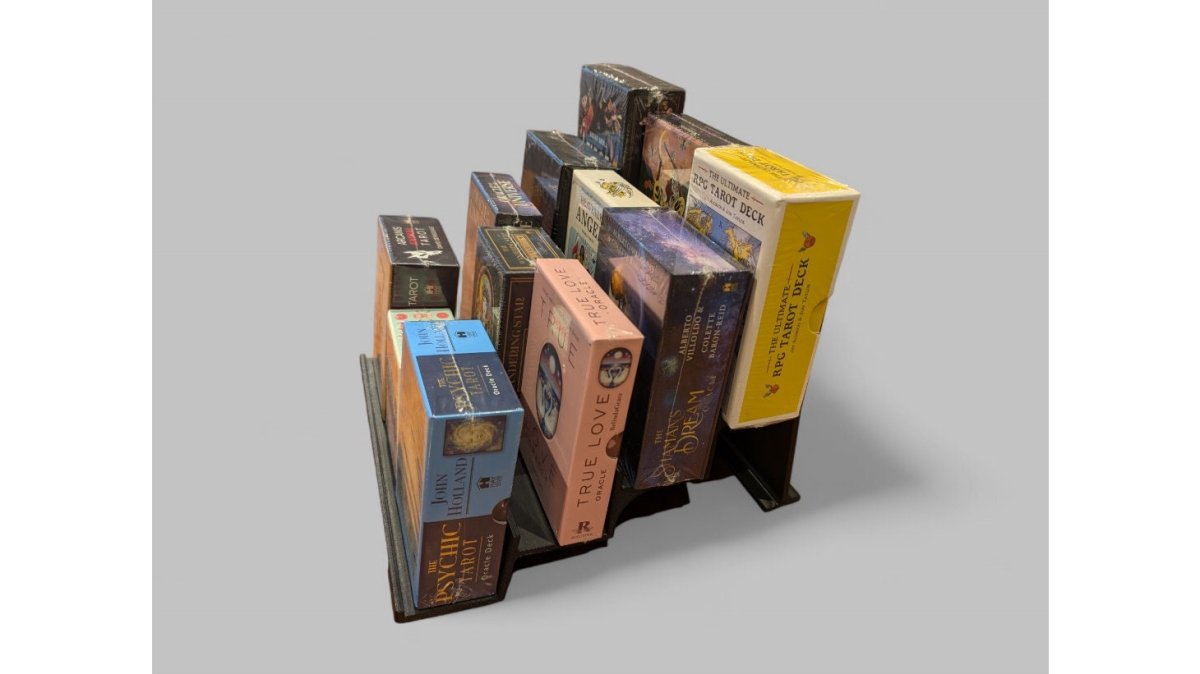
| Tarot Oracle Card Display | Up to 16 decks | $20.99 | Altars and thick decks |
| Trading Card Display Shelf (Wall or Desk) | 1-4 cards | $7.99 | Small, flexible setups |
Modular Graded Card Display Shelf for PSA, BGS, and CGC Slabs
This is the pick for anyone whose graded collection keeps growing. The Modular Graded Card Display Shelf starts as a 3x3 block holding nine slabs, then expands with 3x1, 3x2, or additional 3x3 "with pins" packs that lock together using heavy-duty alignment pins.

The base block measures 12 inches tall by 10 inches wide. Standard slots accept slabs up to 0.375 inches (10mm) thick, while the heavy-duty 3x3T version widens the channels to 1/2 inch (13mm) for thick outer guards and silicone bumpers.
For collectors who want a display tower that grows one block at a time, nothing else here matches the flexibility.
Graded Card Display Shelf for 16 Slabs
If you need a single high-impact showcase, the Graded Card Display Shelf for PSA BGS CGC Slabs holds 16 slabs in a 4x4 grid. It ships as two pieces that slide together with no tools, no glue, and no fuss, which makes it easy to pack flat for card shows and trade nights.
Each tier gives 125mm (about 5 inches) of vertical spacing, and the slots clear cases up to 13mm (1/2 inch) thick, so chunky patch and autograph slabs fit fine. The angled step design tilts cards forward for less glare, which helps if you photograph your collection or stream breaks.
The trade-off is a fixed 4x4 layout.
Playing Card Deck Display Stand with Hidden Storage
Deck collectors get the most capacity per dollar here. The Playing Card Deck Display Stand comes in 4x5 through 4x8 layouts, with the largest holding 32 decks across the main steps.
Modular Graded Card Display Shelf for →

Best Practices for Displaying Graded Card Slabs
Good display practice protects value as much as it shows it off. Keep slabs out of direct sunlight, avoid stacking heavy tiers on top of light ones, and check that your shelf's slot width matches your case thickness before loading it up.
Weight-Bearing Calculations for Heavy Slabs
A graded slab is heavier than it looks, and a full tier adds up fast. Estimate the total load by multiplying the number of slabs per tier by the weight of a single slab, then compare that to the shelf's stated capacity.
Here is a simple way to run the numbers:
- Count the slabs on your heaviest tier
- Weigh one slab on a kitchen scale
- Multiply: slabs x weight = tier load
- Keep the heaviest tier at the bottom, never the top
Post-Processing for a Professional Finish
Post-processing turns a good print into a clean display piece. Most 3D printed shelves arrive with faint layer lines and occasional thin "stringing" residue, both normal for the process rather than defects.
3D Printed Tiered Step Shelves for Tarot Decks
Tiered step shelves solve the one problem every tarot reader knows: thick decks disappear behind each other on a flat shelf. A staggered step design raises the back rows so every deck stays visible, which matters when you read from a full altar.
Filament and Material Selection for Durable Display Stands
PLA is the standard filament for display shelves, and for good reason. It is rigid, holds fine detail, and handles the steady, static load of cards far better than it handles heat or impact.
Modular and Expandable Systems: Space-Saving Display Solutions
Modular systems beat fixed shelves for anyone with limited space. Instead of buying one large stand and hoping it fits, you start small and add units as your collection grows, which keeps your footprint matched to what you actually own.
Conclusion
The hardest part of displaying a collection is not buying a shelf. It is finding one that fits your cards, your space, and the way your collection keeps growing. A fixed stand locks you in, while a modular system from The Card Shelf Workshop lets you start with nine slabs and expand into a full display tower whenever you are ready.
Frequently Asked Questions
Are 3D printed display stands durable enough for heavy card slabs?
Yes, when designed and printed correctly. Stands made from PLA filament with high infill density and thick walls can easily support the weight of standard graded slabs, which typically weigh a few ounces each. The key is proper design: a wide base, reinforced tiers, and interlocking parts all contribute to structural integrity. For very heavy collections, look for stands specifically engineered with weight-bearing calculations in mind, like the modular graded card shelves from The Card Shelf Workshop.
What features should I look for in a modular display stand?
Focus on expandability, stability, and compatibility. A good modular stand uses alignment pins or interlocking parts to connect units securely, so your display grows with your collection. Check the slot dimensions to ensure they fit your specific slab thickness (standard slabs are up to 10mm, while thick cases can be 13mm or more). Also consider the footprint: self-standing tiered designs save desk space while keeping every card visible. The Modular Graded Card Display Shelf from The Card Shelf Workshop is a prime example, offering expandable 3x3 blocks that lock together.
Can 3D printed stands be customized for different collection sizes?
Absolutely. Many 3D printed stands are made to order with customizable dimensions. You can choose the number of columns and rows, the depth of each slot, and even the color. For example, the Playing Card Deck Display Stand comes in layouts ranging from 4x5 up to 4x8, holding 20 to 32 decks. If you have oversized items like thick tarot decks with guidebooks, you can request a custom shelf that accommodates depths up to 51mm. This flexibility is a major advantage over mass-produced shelving.
How do tiered display stands help organize trading card collections?
Tiered step shelves elevate each row so that every card or deck is fully visible, with no obstruction from the row in front. This makes it easy to browse your collection and spot your favorite pieces at a glance. The staggered design also uses vertical space efficiently, so you can display more items on a small desk or tabletop. For collectors with large collections, a tiered stand keeps everything organized and accessible, turning a storage box into a showcase.
What is the best way to display graded card slabs without damaging them?
Keep slabs upright and angled slightly forward to reduce glare and prevent dust from settling on the surface. Avoid stacking heavy items on top of slabs, and make sure the stand's slots are wide enough to prevent pressure on the slab edges. A stand with retention tabs or side rails will keep each slab securely in place. For long-term protection, place the display away from direct sunlight and handle slabs by the edges when rearranging.