

Last Updated: November 7, 2026
Quick Summary
To choose the right tabletop riser for collectible figurines, measure your tallest figure, deepest base, and pose overhang before buying, then match tier rise and depth to those numbers. Each tier should rise roughly a third to a half of the height of the figures in front of it.
- Measure total height, base footprint, and pose overhang, then add about 1 cm of margin.
- Keep heavy scale figures on the lowest tier and lighter prize figures on upper tiers.
- Avoid long unsupported spans, since a shelf that bows under weight will keep bowing.
- Our figurine riser comes in Small at roughly 172 mm, Medium at 230 mm, and Large at 287 mm wide.
- Keep displays out of direct sun and away from bright windows to limit UV fading.
Table of Contents
- Why Most Tabletop Risers Fail Your Figurines
- How to Display Collectible Figurines Without Losing the Back Row
- Anime Figure Sizes: Matching Riser Height to What You Own
- Scale Figure vs Prize Figure: Why the Difference Changes Your Riser
- Choosing a Figure Stand: Acrylic, Wood, or 3D-Printed Plastic
- Arranging Figures on a Tiered Display to Cut Visual Clutter
- Dust, UV, and Base Compatibility: Protecting What You Display
- Pick Your Riser Size and Start Displaying
- Frequently Asked Questions
Why Most Tabletop Risers Fail Your Figurines
Many tabletop risers are designed for cards or cosmetics rather than figures with wide bases, dynamic poses, and real weight.
The fix starts before you buy anything. Measure your tallest figure, your deepest base, and the actual shelf space you have. Then match the riser to those numbers instead of the other way around.
If you want a broader look at what separates a well-built stand from a decorative one, our roundup of the best 3D printed collectibles display stands covers the design details worth checking.
How to Display Collectible Figurines Without Losing the Back Row
Displaying collectible figurines without losing the back row comes down to elevation, spacing, and sightlines.
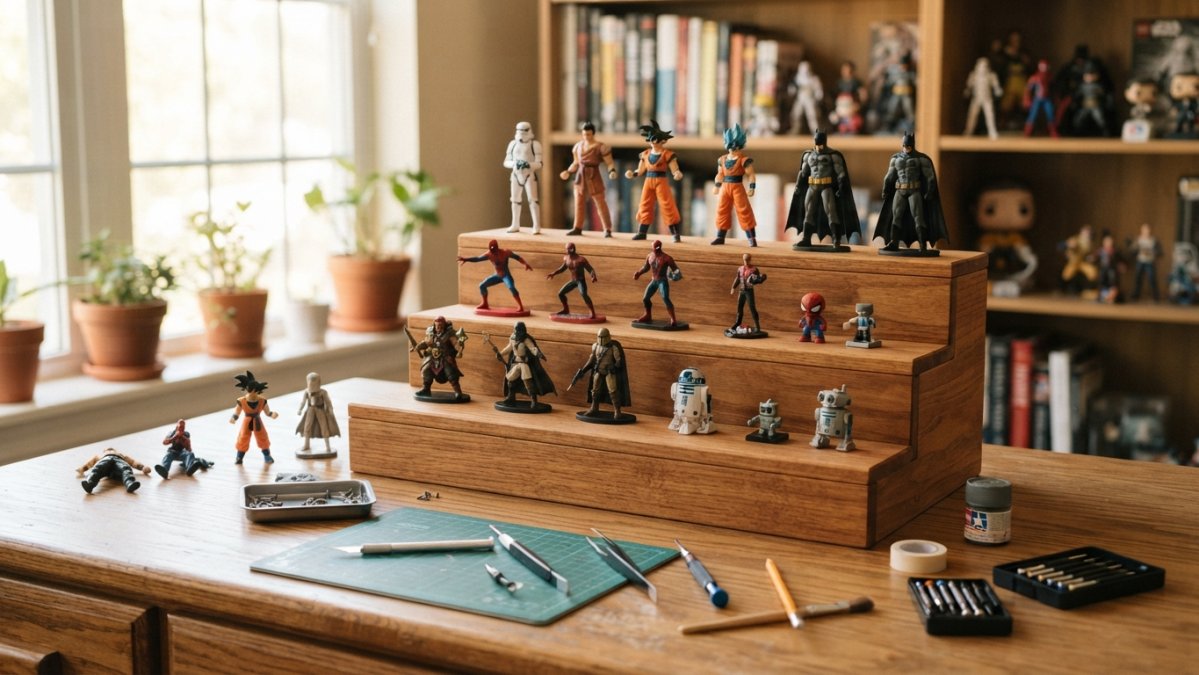
Start with the front row at the lowest point and work backward.
Spacing matters just as much. Leave a finger's width between figures so poses read clearly and dusting stays easy. Rotate taller or more dramatic poses to the back and keep smaller, simpler figures up front.
For collectors who also display decks and slabs, the same logic applies. Our guide to displaying graded cards and decks on tiered shelving explains how to mix formats without the arrangement turning into a jumble.
Anime Figure Sizes: Matching Riser Height to What You Own
Anime figure sizes vary far more than most buyers expect, and that variation decides which riser works. Figure sizes vary widely, so measure the pieces you own rather than relying on general size ranges.
Height is only half the equation. Depth matters because a dynamic pose, a cape, or an outstretched weapon extends the footprint well beyond the figure's body. A statue that looks compact from the front can need two or three extra centimetres of depth behind it.
A Simple Measurement Method for Any Figure
Measure the figure you own, not the figure on the box. Stand it on a flat surface and record three numbers:
- Total height: from the base to the highest point, including hair spikes and raised weapons
- Base footprint: the widest and deepest points of the base itself
- Pose overhang: how far a limb, cape, or accessory extends past the base
Add the base footprint and the overhang to get the real depth you need. Then add a small margin, around 1 cm, so the figure is not touching its neighbours. Write those three numbers on a sticky note and take it shopping. It beats guessing every time.
Scale Figure vs Prize Figure: Why the Difference Changes Your Riser
Scale figure vs prize figure is a distinction about build, weight, and finish, and each one asks something different from a stand. A scale figure is a premium, often limited piece with finer detail, heavier materials, and a more complex base. A prize figure is a mass-produced, budget-friendly figure, usually lighter and simpler in construction.
That difference changes your riser in three ways. Scale figures need more load support because they weigh more and often sit on wide, decorative bases. Prize figures are lighter, so a slim riser handles them fine, which makes them ideal for the upper tiers. And because scale figures tend to be the centrepiece of a collection, they usually deserve the top tier where they are fully visible.
A common mistake is treating every figure the same. Group your prize figures on the lower, lighter tiers and give your scale pieces the top and the sturdiest support. The display instantly reads as intentional rather than crowded.
Choosing a Figure Stand: Acrylic, Wood, or 3D-Printed Plastic
Choosing a figure stand comes down to three materials, and each has a clear best use. But for collectible figurines, the decision goes beyond looks: you need to think about how each material treats delicate finishes, how it ages, and how easy it is to keep clean without risking damage.
Acrylic is clear, clean-looking, and easy to wipe down, but thin acrylic can flex under weight and scratch over time. Scratches are more than cosmetic, they can create sharp edges that snag a figure's paint or cape. A stiff filament and adequate infill help keep a printed riser stable, while careful handling of the figures themselves matters just as much for preventing figure breakage.
| Material | Best For | Watch Out For |
|---|---|---|
| Acrylic | Clean, modern look; light figures | Flexing on long spans; scratches that can snag delicate parts |
| Wood | Heavy statues; warm room decor | Weight; limited tier shapes; warping in humidity if unsealed |
| 3D-printed plastic | Custom tier layouts; mixed collections | Choosing a thin, flexy print; layer lines are normal |
Our figurine riser is 3D-printed in PLA filament, and 3D printing can leave visible layer lines.
Material Comparison for Collectible Preservation
When preserving collectibles, compare materials on stability, visibility, cleaning, scratching, and long-term suitability. Acrylic offers excellent visibility but scratches easily; always use a microfiber cloth and avoid abrasive cleaners. Wood provides a solid, non-scratching surface but can harbor dust in grain and may off-gas if freshly finished, allow it to cure before placing figures. 3D-printed plastics vary by filament: For long-term display, choose a material that won't yellow, warp, or release chemicals that could affect paint.
Watch out: placing a heavy statue on a thin acrylic span can cause flexing that scratches the base or, worse, a sudden failure. Always match material thickness to the load, and when in doubt, size up.
Load Capacity and Preventing Bowing or Tipping
Load capacity and tipping are where cheap risers give themselves away. A tier only stays flat if the material and the span are matched, and a stand only stays upright if its footprint is wider than the load sitting on top.
Three habits prevent both problems. Keep heavy pieces on the lowest tier, where the base is widest and the centre of gravity is lowest. Avoid long unsupported spans, since a shelf that bows under weight will keep bowing. And check that every base sits fully on its tier rather than hanging over the edge.
Watch out: stacking heavy statues on the top tier of a lightweight riser is the fastest way to a tip-over, and the damage to a limited figure is rarely repairable.
Arranging Figures on a Tiered Display to Cut Visual Clutter
Arranging figures on a tiered display is about rhythm, not symmetry. A shelf where every figure is the same size and spacing looks like a warehouse. A shelf with deliberate variation looks like a collection.
Try these habits:
- Group figures by series or theme, then vary the heights within each group
- Put the tallest or most dramatic pose at the visual centre of the top tier
- Leave one clear gap per tier so the eye has somewhere to rest
- Face figures slightly inward so the group reads as a scene
- Keep the front row short so nothing behind it disappears
The goal is a showcase where each piece can be seen, not a wall of plastic. Rotate a few figures every month and the display stays fresh without buying anything new.
Dust, UV, and Base Compatibility: Protecting What You Display
Dust, UV light, and base fit are the three quiet threats to a displayed collection. Dust settles fastest on upward-facing surfaces, sunlight fades paint over months, and a base that does not sit flat puts stress on a figure's ankles and stand.
A soft brush and a weekly pass keep most of it off. For UV, keep displays out of direct sun and away from bright windows; even indirect daylight adds up over a year.
Base compatibility is the one buyers forget. Check that your riser's tier depth matches your widest base, and that any lip or stop sits outside the base rather than pressing on it. Our figurine riser has a subtle perimeter indentation on each cylinder tier to help keep items from sliding.
Compatibility with Different Figure Bases and Poses
Irregular footprints are common with dynamic poses, clear support rods, and diorama bases. A figure with a wide stance or a cape that sweeps outward may need a deeper tier than its body suggests. Articulated figures often have small, uneven feet that can wobble on a flat surface, a riser with a slight lip or a textured surface helps them stay put. Heavy statues with narrow bases concentrate weight; ensure the tier material is thick enough and consider a riser with a metal reinforcement if available.
Watch out: placing a figure with a felt or fabric base on a smooth acrylic tier can cause it to slide; use a thin non-slip pad if needed.
Pick Your Riser Size and Start Displaying
Picking the right riser size starts with your measurements, not the product photo. Match the tier rise to your tallest front-row figure, the tier depth to your widest base plus overhang, and the overall footprint to the space you actually have.
Our collectible figurine display stand comes in three sizes so you can match it to your collection: Small at roughly 172 mm wide, Medium at 230 mm, and Large at 287 mm, each with ten cylinder tiers and a built-in lip to keep figures in place. If your collection does not fit a standard size, we take custom and made-to-order shelf requests and can talk through sizing before you commit.

Start with your three measurements, choose the size that clears them, and set your front row first. That is the whole method, and it works whether you own five figures or fifty.
Your figures deserve a display that shows every one of them, not a shelf that hides half the collection. The Card Shelf Workshop builds 3D-printed tiered risers with ten cylinder tiers, a perimeter lip on every level, and a choice of three sizes to fit real collections.
Frequently Asked Questions
How do I choose the right size tabletop riser for my figurines?
Measure your tallest figure first, then check the riser's overall height and the diameter of each tier. The back tier should clear the head of the figure in front of it, and each cylinder platform needs to be wider than the figure's base. The staircase riser comes in Small, Medium, and Large, with footprints from roughly 172 mm to 288 mm wide and cylinder diameters from 30 mm to about 94 mm. Match the largest base in your collection to the widest tier.
How much space should there be between figurines on a riser?
Leave enough room that no figure blocks another's face or silhouette from your normal viewing angle. A practical rule is a finger's width of clear space between bases, and more for figures with wide poses or outstretched arms. On a tiered display, stagger tall figures toward the back and short ones toward the front. The perimeter lip on each cylinder helps hold items in place, so you can space them evenly without worrying about sliding.
How do you display collectible figurines on a tabletop without clutter?
Group figures by theme, scale, or color rather than lining up everything you own. Use a tiered display to create a clear front-to-back hierarchy, keep one focal figure per tier, and remove pieces that compete for attention. Rotating your collection every few months keeps the display fresh and reduces crowding. A self-standing riser also lets you reposition the whole arrangement without wall mounting.
Are tiered risers suitable for different-sized figurines?
Yes, as long as the tier diameters suit your smallest and largest bases. A staircase riser with graduated cylinders handles a mix of amiibo, Funko Pops, miniatures, and anime figures on the same stand. Check that the smallest base is not narrower than the cylinder platform and that the tallest figure does not overhang the tier behind it. If your collection spans very small and very large pieces, choose the size that fits the majority and display outliers separately.
Figurine riser widths by size
