

Last Updated: October 28, 2026
Quick Summary
To store trading card decks for play, use a deck box, which keeps a ready-to-play deck together and lets you grab it and play. Binders suit browsing, trading, and rares, but they are slow to pull a deck from. Sleeve a full deck as you play it, then measure the stack before buying storage.
- A deck box holds one deck, not a collection, while a binder is for browsing or trading.
- Double-sleeving adds another layer, so sleeve a full deck the way you play it and measure the stack.
- Group a deck's kit into four parts: main deck, sideboard, tokens and dice, and spare sleeves.
- Our collapsible trading card display shelf holds over 45 cards in a 3x3 layout or over 60 in a 3x4 layout.
- Pack your bag the night before and check deck box, sideboard, tokens, dice, spare sleeves, and box labels.
Table of Contents
- Deck Box vs Binder: Which Keeps a Playable Deck Ready
- Card Sleeves for Trading Cards: The Layer That Decides Your Storage Fit
- How to Store Trading Cards So Decks Stay Shuffle-Ready
- Sleeved-Deck Capacity and Fit: What Actually Fits in a Box
- Portable Storage and Tournament Readiness
- Storing Decks, Sideboards and Accessories Together
- Set Up a Deck Shelf That Keeps Every Deck in Reach
- Frequently Asked Questions
Deck Box vs Binder: Which Keeps a Playable Deck Ready
A deck box and a binder serve different purposes. A deck box keeps a deck together, while a binder is for browsing or trading cards.
That distinction matters more than most players realize. At The Card Shelf Workshop, we build tiered displays for decks and slabs, so we spend a lot of time thinking about how cards actually get used, not just how they get filed away. Storage that fights your play routine wears thin fast.
A deck box and a card binder are different storage options.
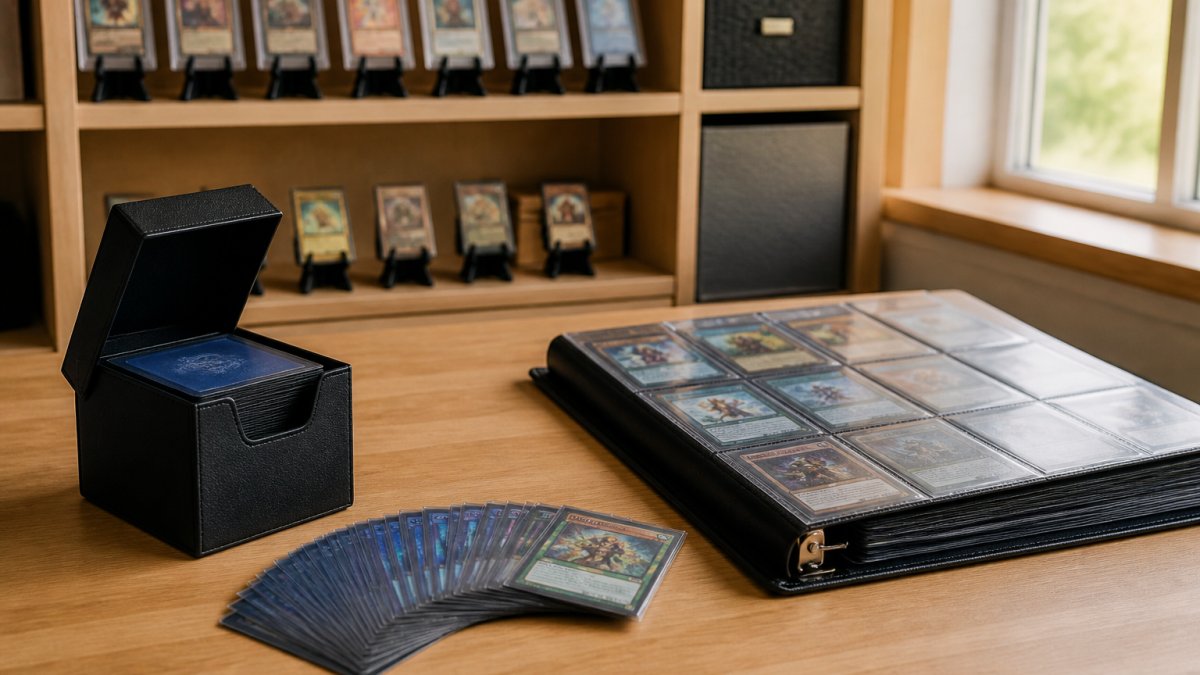
Here is the short version:
| Storage Option | Best For | Trade-Off |
|---|---|---|
| Deck box | Ready-to-play decks | Holds one deck, not a collection |
| Binder | Browsing, trading, rares | Slow to pull a deck from |
| Storage box | Bulk and overflow | No quick access to a single deck |
| Display shelf | Keeping decks visible and in reach | Home base, not a carry case |
If you want a deck you can grab and play, a deck box wins every time. Binders earn their place for everything else.
Card Sleeves for Trading Cards: The Layer That Decides Your Storage Fit
Card sleeves for trading cards can affect how a deck fits in a box.
Double-sleeving adds another layer. Before you buy any storage, sleeve a full deck the way you actually play it, then measure the stack.
A few practical rules we stand by:
How to Store Trading Cards So Decks Stay Shuffle-Ready
Storing trading cards can involve considering how to organize decks and keep them accessible.
Here is the maintenance and organization system we recommend, built around four habits:
For a deeper look at card displays, see our guide on vertical storage for card collections.
Sleeved-Deck Capacity and Fit: What Actually Fits in a Box
For a guide to organizing MTG collections, see our breakdown of how to organize massive MTG collections.
Collapsible Trading Card Display Shelf | TCG MTG CCG →
Portable Storage and Tournament Readiness
Tournament table setup. At the table, you want your deck, sideboard, tokens, dice, and a playmat within reach without digging. A small divided case or a collapsible display shelf can serve as a visible, organized station. Our collapsible trading card display shelf holds over 45 cards in a 3x3 layout or over 60 in a 3x4 layout. Your shelf stands on its own, so it works on a desk, a side table, or a shelf top without any mounting.

A shelf does not replace a deck box for transport. It replaces the storage box at home, and it turns your decks into something you actually enjoy looking at.
Storing Decks, Sideboards and Accessories Together
We group a deck's kit into four parts: the main deck, the sideboard, tokens and dice, and spare sleeves. Each part needs a home that lives with the deck, not in a drawer across the room. A divided storage case with labelled compartments handles this well, and dividers keep everything from migrating.
If you are building a full collection system, our guide on the best way to organize MTG cards covers organizing MTG cards.
Set Up a Deck Shelf That Keeps Every Deck in Reach
A deck shelf can display decks within reach.
This is where a tiered step shelf earns its place. Our playing card deck display stand is a tiered display. The shelf stands on its own, so it works on a desk, a side table, or a shelf top without any mounting.
For players who also keep graded cards on show, our modular graded card display shelf fits PSA, BGS, and CGC slabs and expands as your collection grows. The product listing notes that minor surface imperfections can occur in the 3D-printing process.

A shelf does not replace a deck box for transport. It replaces the storage box at home, and it turns your decks into something you actually enjoy looking at.
Frequently Asked Questions
What is the best way to store a trading card deck for play?
A deck box keeps a playable deck together, protected and ready to shuffle, while a binder is better for extras and trades. If you want decks you can grab and play, store each one in its own box with the sideboard and tokens. If you also want them visible at home, a self-standing tiered display shelf holds several deck boxes at once so every deck stays in reach without being buried in a larger storage box.
Should you keep a playable card deck in a deck box or a binder?
Use a deck box for anything you actually play. A binder holds cards flat and is great for browsing trades, but pulling a 60-card deck in and out of binder pages wears the sleeves and slows you down at the table. Keep the playable deck in a box and use the binder for spare copies, sideboard options and cards you are trading. That split is the core of the trading card binder vs deck box decision.
Do trading cards need sleeves inside a deck box?
Yes, sleeve the deck before it goes in the box. Card sleeves for trading cards protect edges and faces from shuffling wear, and they add thickness you need to account for. A double-sleeved 60-card deck takes noticeably more room than bare cards, so measure the sleeved stack before buying a box. Choose a box with a snug fit so cards do not slide around, but leave a little room so you are not forcing the deck in and bending corners.
How do you store a trading card deck between games?
Return the deck to its box after every game, keep the box out of direct sunlight and away from heat, and store it somewhere dry. Add a divider or label so you know which deck is which without opening every box. If you keep several decks at home, a tiered self-standing shelf lets you see and reach each box without stacking them, which cuts down on dust settling on the cards and makes it obvious when a deck is missing.
How should you store extra cards and sideboards with a deck?
Keep the sideboard in the same box as the main deck, separated by a divider so the two never get mixed mid-match. Tokens, dice and a life pad can go in a small compartment or a second box that travels with the deck. For the wider collection, sort extras into a binder or storage box by set or color, and label each section. That way the play deck stays lean while everything you might swap in stays close at hand.
The challenge is simple: most players store decks in a way that slows down every game night. Pick a deck box for each playable deck, sleeve before you shop, and give your decks a shelf that keeps them visible and ready. The Card Shelf Workshop builds tiered, self-standing displays with modular and expandable designs, custom color options, and configurations sized to your collection. Get started with The Card Shelf Workshop and turn your decks into an organized, reachable display.
